


What Happens When Face to Face Varies in Rockvalves DIN Standard Cast Steel Valves
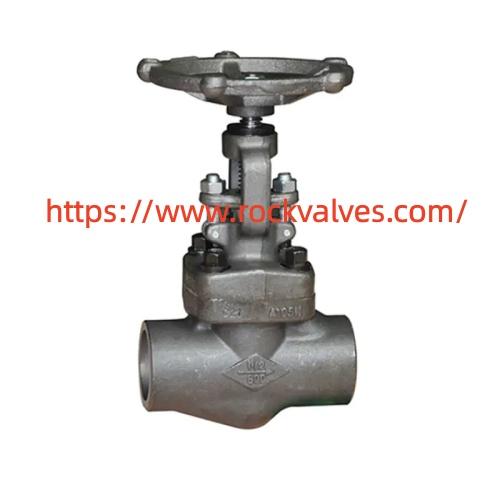
DIN Standard Cast Steel Valves rely on carefully controlled face to face dimensions because these lengths determine how the unit fits into a piping system. When the distance between the two flange faces matches the published table value the assembly drops into place without the need to spring the pipe or add spacers. Any deviation creates immediate problems during installation and later during operation.
A length that runs short leaves a gap that installers may try to close by pulling the flanges together. The resulting bending moment loads the pipe wall and the flange bolts unevenly. Over time this uneven load can relax gasket stress on one side while over compressing the opposite side. The opposite case a length that runs long forces the crew to cut the pipe or accept a cocked joint. Both situations raise the chance of external leakage and increase the effort needed to open or close the unit under pressure.
Interchangeability forms another practical reason these dimensions receive close attention. Plants often keep spare units on the shelf for rapid change out. If the replacement matches the original end to end distance the swap can be completed during a short outage window. The bolts line up the gasket seats properly and the system returns to service without additional fabrication. When the lengths differ the outage extends while pipefitters modify the line. That extra time carries direct cost and can affect production schedules.
Piping designers also depend on the fixed measurement when they create isometric drawings. Knowing the exact space the unit will occupy lets them route the line correctly from the start. Supports can be placed at the right locations and thermal expansion loops can be sized without later surprises. A consistent face to face value removes one variable from the stress analysis so that calculated loads remain valid once the hardware arrives on site.
Manufacturing control of the dimension begins with the pattern or the forging die and continues through final machining. Flange faces must stay parallel and the overall length must stay inside the tolerance band listed in the governing table. Quality checks include direct measurement with calibrated gauges after the final facing cut. Units that fall outside the band are set aside rather than shipped. This discipline protects the end user from the field problems described earlier.
In service the face to face length interacts with other geometric features. The position of the stem relative to the ends influences accessibility for actuation. The location of the seat ring relative to the flange faces affects how fluid forces act on the closure element. Keeping the overall length correct therefore supports more than simple fit up it also helps maintain the internal relationships that the designer intended.
Rockvalves pays attention to these geometric requirements during production so that each unit arrives ready for straightforward installation. The result is a smoother project timeline and fewer adjustments once the equipment reaches the job site.
Project teams that need units with verified end to end dimensions can review available options and technical data sheets at https://www.rockvalves.com/ to confirm suitability for their line sizes and pressure classes.

 English
 French
 Spanish
 Portuguese
 Deutsch
 Turkish
 Dutch
Dutch
 Italiano
 Russian
 Romaian
 Portuguese (Brazil)
 Greek
Greek
 Indonesia