


Which jinglitools Air Compressor Details Should Buyers Review Before Ordering?
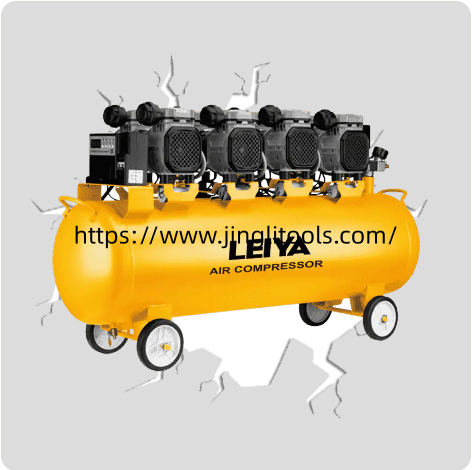
Air Compressor selection should begin with the actual requirements of the workshop rather than a single specification. Buyers should review airflow, operating pressure, duty cycle, tank capacity, electrical supply, noise, installation space, maintenance requirements, and the tools that will use compressed equipment. A practical selection process connects product characteristics with real workplace conditions, helping businesses organize purchasing decisions around their daily applications.
Start With The Intended Applications
The first step is identifying what the equipment needs to support.
Workshops may use pneumatic impact tools, spray equipment, inflators, grinders, nailers, cleaning devices, or other equipment. Each application can have different flow and pressure requirements.
Buyers should list the tools expected to operate regularly and check their stated requirements. This creates a practical reference for comparing available configurations.
If several tools may operate simultaneously, their realistic combined demand should also be considered.
Review Delivered Flow
Flow capacity is an important specification because it indicates how much usable compressed output the equipment can provide.
Buyers should compare delivered flow at the required working pressure instead of relying only on theoretical displacement figures.
Different manufacturers may use different measurement conditions, so purchasers should check how the stated figures were obtained.
A workshop using continuous-demand equipment may require a different configuration from one using tools intermittently.
Matching output with actual consumption can help reduce recovery delays during daily work.
Check Working Pressure
Pressure requirements should be evaluated together with flow capacity.
Every pneumatic tool has an operating pressure range, and the selected equipment needs to provide suitable pressure under realistic conditions.
Buyers should also consider pressure losses through hoses, regulators, filters, fittings, and piping.
A system may show suitable pressure at the source while delivering less pressure at the point of use.
Checking the complete delivery path can therefore provide a clearer picture of practical operating conditions.
Consider Duty Cycle
Duty cycle describes how frequently equipment can operate within a particular period.
A workshop performing occasional inflation or short fastening tasks may have different requirements from a facility using spray equipment or grinders for extended periods.
Buyers should review the manufacturer's stated operating conditions and compare them with the longest realistic work period.
Selecting equipment according to actual usage patterns can help avoid an unnecessary mismatch between expected workload and operating capability.
Examine Tank Capacity
Tank capacity provides stored compressed output for periods of demand, but it should not be considered a substitute for sufficient continuous production.
A larger tank can help buffer intermittent consumption and reduce frequent cycling in certain applications.
However, if a tool consistently consumes compressed output faster than the equipment can produce it, stored capacity will eventually decrease.
Buyers should therefore evaluate tank size together with flow, pressure, and duty cycle.
Check Electrical Requirements
Electrical compatibility is another important purchasing factor.
Customers should review voltage, frequency, phase, current requirements, starting conditions, plug configuration, and recommended circuit protection.
The workshop's existing electrical infrastructure should be checked before ordering. Larger equipment may require a dedicated circuit or a particular supply arrangement.
Confirming these details early can reduce installation problems and help buyers prepare the intended workspace.
Consider Noise And Installation Space
A workshop may have limited floor space or specific noise requirements.
Buyers should measure the available installation area and leave sufficient room for ventilation, inspection, cleaning, drainage, and maintenance access.
Noise specifications should also be reviewed according to the measurement method used by the manufacturer.
For smaller workspaces, equipment with a quieter operating design may be worth considering when the application allows it.
Evaluate Output Cleanliness
Different applications can have different cleanliness requirements.
Some workshops may require cleaner compressed output for painting, sensitive equipment, or specific production processes. Others may use compressed output mainly for fastening, inflation, or general workshop tasks.
Buyers should consider filtration, moisture separation, drainage, and drying requirements as part of the complete system.
An oil-free configuration can be relevant where avoiding lubricating oil in the output stream is an application consideration. jinglitools offers oil-free models designed for applications where this configuration is appropriate.
Review Maintenance Requirements
Maintenance planning should be part of the purchasing process.
Buyers can ask about cleaning procedures, filter inspection, condensate management, replacement components, service intervals, and technical support.
For businesses operating several units, spare parts availability can also influence purchasing decisions.
Clear maintenance information helps workshop managers establish inspection routines and prepare service schedules before equipment enters regular operation.
Think About Portability And Workspace Layout
Not every workshop uses equipment in the same location.
Some units remain beside a fixed workbench, while others may need to move between service areas.
Buyers should consider equipment dimensions, weight, wheels, handles, storage arrangements, and available floor space.
The intended movement pattern should influence the selected configuration. A portable design may be useful for mobile tasks, while a stationary arrangement can suit a fixed production area.
Consider Future Workload
Current requirements are important, but buyers can also consider planned changes.
A workshop may add new pneumatic tools, increase production hours, or introduce additional service operations. These changes could increase compressed output demand.
Instead of selecting equipment only around today's workload, businesses can discuss expected future requirements with the manufacturer.
This can help purchasing teams prepare equipment plans that remain aligned with operational development.
Review Manufacturer Capability
For commercial buyers, evaluating the manufacturer can be as important as comparing product specifications.
Customers may review production experience, product development, quality inspection, customization options, packaging, communication, and service arrangements.
jinglitools provides product options for different workshop applications and can provide product information for customers evaluating suitable configurations.
For distributors, understanding manufacturing capability can also be useful when planning repeat purchases or discussing product requirements for different markets.
Compare The Complete System
A workshop should not evaluate the equipment as an isolated product.
Hoses, regulators, filters, dryers, fittings, piping, and point-of-use equipment can all affect how compressed output reaches the tool.
Undersized components or excessive pressure loss can reduce the usefulness of an otherwise suitable configuration.
Buyers can therefore prepare a comparison covering flow, pressure, duty cycle, tank capacity, electrical requirements, noise, installation, accessories, maintenance, and supplier support.
This application-based method makes it easier to identify which specifications actually matter for the intended work.
Match The Purchase With Real Conditions
Choosing workshop equipment requires a balanced review of application requirements, operating frequency, control features, storage capacity, electrical conditions, installation space, maintenance, and supplier support.
jinglitools offers product options for buyers seeking equipment suited to different workshop environments. Visit https://www.jinglitools.com/ to review available products and compare configurations according to your application, workspace, purchasing quantity, and planned workload.

 English
 Arabic
 Spanish
 Portuguese
 Deutsch
 Turkish
 Dutch
Dutch
 Italiano
 Russian
 Romaian
 Portuguese (Brazil)
 Greek
Greek
 Indonesia