


Which Air Compressor Machine Settings Help Prevent Pressure Loss? jinglitools
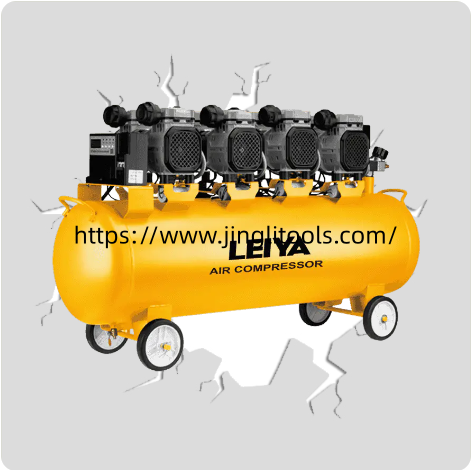
Air Compressor Machine pressure loss can interrupt workshop tasks, especially when pneumatic tools need steady output during repeated work. A gradual pressure decline, a sudden drop under load, or pressure loss while the unit is idle can point to different causes. The issue may involve loose fittings, damaged hoses, regulator settings, restricted passages, insufficient capacity, or internal components that need inspection. A structured check can help identify the source before unnecessary parts are replaced.
Start With Visible Connections
A small leak around a connection can create a noticeable pressure problem over time. Fittings, couplers, hoses, drain valves, and seals can loosen or wear after repeated workshop use. Movement, vibration, temperature changes, and frequent connection cycles may also affect sealing surfaces.
Begin with visible connections and listen for unusual hissing when the system is pressurized. A suitable leak-detection method can help identify escaping gas around suspicious points. Always follow the equipment manual before performing any inspection or maintenance.
If a damaged hose, seal, or fitting is identified, replace it with a compatible component rather than continuing to operate with a known leak.
Check the Hose and Coupler Arrangement
The path between the equipment and a pneumatic tool can influence pressure at the point of use. Long hoses, narrow internal diameters, multiple couplers, filters, and adapters can create resistance.
This becomes more noticeable when a tool has relatively high consumption requirements. A gauge near the tank may show an acceptable reading while the tool receives less pressure during operation.
For workshop applications, inspect hose condition, internal diameter, length, coupler type, and connection points. Keeping the distribution path suitable for the intended application can help reduce unnecessary pressure loss.
Review the Regulator Setting
A regulator controls the pressure delivered to the connected tool. If its setting is lower than the tool requires, the equipment may appear to lack power even when the tank gauge shows a higher value.
Check the tool manufacturer's recommended operating range and compare it with the regulator setting. Avoid simply increasing the setting to compensate for a suspected leak or restriction.
If the regulator behaves inconsistently, does not hold its setting, or shows signs of contamination or wear, it may require cleaning, replacement, or professional inspection.
Consider the Tool's Actual Demand
Pressure can decline when a pneumatic tool consumes more volume than the system can supply. This can happen during continuous operation, repeated impact work, sanding, spraying, or when several tools operate simultaneously.
Capacity should therefore be considered alongside maximum pressure. Buyers should review delivered flow at the required working pressure rather than relying only on motor power or tank size.
Before selecting equipment, list the tools that may operate at the same time and check their stated consumption requirements. This approach gives buyers a clearer picture of the capacity needed for actual workshop conditions.
Inspect the Intake Filter
A dirty intake filter can restrict the volume entering the compression system and may affect how quickly the tank reaches its target pressure. Workshop environments containing dust, chips, or fine particles can make filter inspection particularly important.
Follow the manufacturer's recommended maintenance schedule and inspect the filter according to the supplied instructions. If it is blocked or damaged, clean or replace it as specified.
A gradual increase in recovery time can be a useful warning sign. When the unit takes noticeably longer to build pressure than before, filter condition should be included in the inspection.
Examine the Check Valve and Drain Valve
The check valve helps prevent stored pressure from moving backward toward the pump after the motor stops. A valve that does not seal correctly may contribute to pressure loss or unusual cycling.
The drain valve is another point worth checking. It is used to remove accumulated moisture from the tank, but an improperly closed or worn valve can allow pressure to escape.
Because these components may be connected to a pressurized system, maintenance should follow the manufacturer's procedures. Release stored pressure and disconnect power as required before servicing.
Do Not Ignore System Capacity
A pressure problem does not always mean the equipment has failed. Sometimes the selected capacity simply does not match the workshop workload.
Consider delivered flow, working pressure, duty cycle, tank capacity, and simultaneous tool demand together. A smaller unit may handle intermittent fastening work but struggle when a high-demand pneumatic tool operates continuously.
A larger tank can provide additional stored volume for short demand peaks, but tank size alone does not increase the fundamental output of the pump. Matching equipment capacity with actual tool requirements remains important.
Build a Practical Troubleshooting Routine
When pressure drops, avoid changing several settings at once. Instead, work through the system in a logical order.
First, inspect visible connections and hoses. Next, check the regulator, filter, valves, and tool demand. Then compare the equipment's rated output with the actual application. This process makes it easier to identify whether the problem is caused by leakage, restriction, incorrect settings, or insufficient capacity.
If pressure falls while the unit is idle, leakage deserves particular attention. If pressure falls only when a tool operates, focus on demand, hose arrangement, regulator settings, and downstream restrictions.
Consider Equipment Selection Before Replacing Parts
For manufacturers, helping customers understand application requirements is an important part of product communication. jinglitools offers power equipment for different workshop applications, allowing users to review product specifications according to their intended tasks.
When comparing models, consider rated pressure, delivered output, tank capacity, duty pattern, electrical requirements, portability, noise considerations, and maintenance guidance. Selecting according to the actual workload can help avoid a mismatch between equipment capability and workshop demand.
Conclusion
Pressure loss during daily workshop use can come from several areas, including leaks, hose restrictions, regulator settings, valve problems, filter condition, tool demand, or equipment capacity. A methodical inspection can help separate a simple connection issue from a broader system requirement.
For buyers and workshop operators, the key is to evaluate the complete application rather than relying on one specification. Consider the tools being used, required working pressure, expected operating frequency, distribution layout, and maintenance needs before making a decision.
jinglitools provides workshop equipment for different working requirements. To review available products and manufacturer information, visit https://www.jinglitools.com/ and compare the available options according to your application.

 English
 Arabic
 French
 Spanish
 Portuguese
 Turkish
 Dutch
Dutch
 Italiano
 Russian
 Romaian
 Portuguese (Brazil)
 Greek
Greek
 Indonesia