


Why Is Compositemould SMC Mould Important For Composite Production
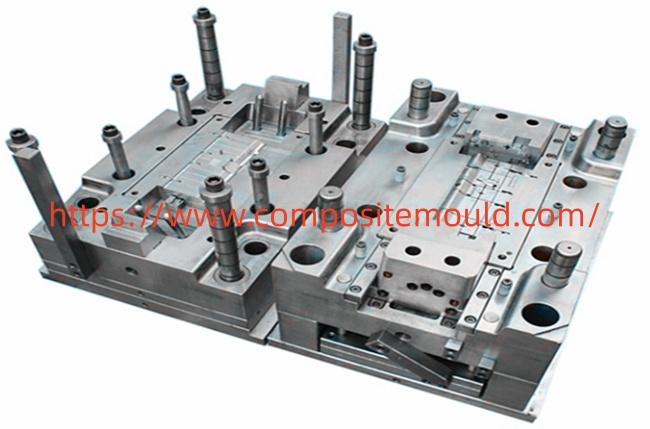
SMC Mould is a tooling solution used with Sheet Molding Compound, a composite material commonly formed through compression molding. The material generally combines thermosetting resin, reinforcing fibers, fillers, and additives, while the tooling provides the cavity in which heat and pressure shape the prepared sheet into a finished component. In modern manufacturing, this process matters because it connects material behavior with part geometry, surface requirements, production consistency, and application-specific design.
What Is Sheet Molding Compound?
Sheet Molding Compound is supplied as a prepared sheet containing resin and reinforcement. Glass fiber is widely used, although formulations can vary according to the intended application. During production, the ingredients are combined into a sheet and allowed to mature before forming. This preparation gives the material a workable condition for subsequent compression molding.
Unlike liquid molding processes, the prepared charge arrives at the production stage in a semi-finished form. Manufacturers can cut the material according to the required part and then place it into a heated cavity.
How Does The Molding Process Work?
The process starts with a prepared charge positioned inside the tooling. Heat causes the resin system to become flowable, while applied pressure helps the material move through the cavity. As curing progresses, the material develops its final shape.
This means cavity design has a direct relationship with the finished component. Geometry, material flow, venting, heating balance, and curing conditions all need to be considered together. A recent technical explanation from Compositemould also highlights cavity layout, venting, and heating balance as important areas in tooling design.
The result is a production method that can form panels, housings, covers, structural components, and other composite parts with integrated features.
Why Does Tooling Design Matter?
Tooling is not simply a negative shape of the finished product. Its construction influences how the material enters the cavity, where air can escape, how heat is distributed, and how the cured component can be released.
For parts with ribs, bosses, mounting points, or other integrated details, these features need to be considered during the design stage. Poorly planned geometry can create filling difficulties or make demolding more complicated.
A practical design process therefore starts with the finished component. Engineers can review drawings, material characteristics, expected production volume, surface requirements, and installation features before determining the cavity structure.
Which Industries Use SMC Components?
SMC technology is associated with a wide range of industrial applications. Automotive components, electrical housings, construction products, transportation components, and equipment enclosures are among the areas where this type of composite processing is used.
Electrical applications can benefit from the ability to produce shaped insulating housings and enclosures. In transportation, molded composite panels and covers can be designed around specific geometry. Construction applications may include covers, channels, panels, and related components.
The appropriate formulation and tooling approach depend on the intended use rather than simply the material category.
What Should Manufacturers Consider Before Ordering Tooling?
A tooling project should begin with clear technical information. Buyers can prepare 2D drawings, 3D models, material details, dimensions, surface expectations, production quantities, and information about mounting or assembly features.
It is also useful to discuss the expected molding process before finalizing the tooling design. Temperature, pressure, material flow, curing behavior, venting, and release requirements can influence the cavity structure.
Compositemould works with composite tooling projects and provides SMC-related mold solutions designed around customer requirements. Its product development approach includes consideration of cavity design and manufacturing needs for different applications.
How Can SMC Tooling Support Production Planning?
One practical advantage of compression molding is that a prepared composite charge can be formed within a defined cavity, allowing manufacturers to plan a repeatable sequence around material preparation, loading, pressing, curing, demolding, and inspection.
For production teams, tooling should therefore be considered alongside the complete workflow rather than as an isolated component. Material storage, charge preparation, machine settings, inspection procedures, and post-molding operations can all affect the final production process.
A well-planned tooling project can also make future communication easier because the approved design becomes a reference for subsequent manufacturing work.
What Should Buyers Check Before Production?
Before manufacturing begins, buyers should review the final drawings and confirm critical dimensions, surface details, parting lines, venting arrangements, heating requirements, and demolding considerations.
A design review is particularly useful when the component contains curved surfaces, deep sections, ribs, holes, or other features that can influence material flow. Sample discussions or trial molding can also help identify practical adjustments before a production program is established.
The objective is not simply to create a cavity that matches a drawing. The tooling should work with the selected material and molding process to produce the intended component.
Why Does SMC Matter In Modern Manufacturing?
As composite components become part of different industrial products, manufacturers need production methods that connect material properties with practical geometry and repeatable processing. SMC compression molding provides one route for converting prepared composite sheets into shaped components, while carefully designed tooling provides the physical structure required during forming and curing.
For manufacturers planning an SMC project, the tooling decision should be based on component geometry, material formulation, molding conditions, surface requirements, production volume, and inspection expectations. Compositemould can support this process with tooling solutions developed around specific project requirements.
If you are planning composite tooling for electrical, automotive, construction, transportation, or industrial applications, you can review the available information and product solutions at https://www.compositemould.com/ before discussing your component drawings and manufacturing requirements.

 English
 Arabic
 French
 Spanish
 Portuguese
 Deutsch
 Turkish
 Dutch
Dutch
 Italiano
 Russian
 Romaian
 Portuguese (Brazil)
 Indonesia