


Sensor Hub Market Forecast: Technology Advancements Supporting Long-Term Growth
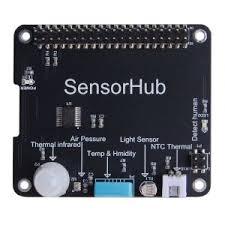
Immersive technologies such as Augmented Reality (AR) and Virtual Reality (VR) represent some of the most computationally demanding environments for real-time spatial sensing. Providing a believable, comfortable immersive experience requires sub-millisecond motion tracking accuracy to match virtual renderings with real-world head and body movements. Any latency or spatial jitter between physical motion and visual feedback can induce disorientation and motion sickness. To achieve high-fidelity spatial tracking, AR/VR headsets rely heavily on dedicated sensor hub architectures executing complex sensor fusion techniques, including Kalman filtering and visual-inertial odometry (VIO). These low-latency subsystems continuously process high-frequency telemetry from multi-axis inertial measurement units (IMUs), eye-tracking modules, and external tracking cameras. By managing continuous spatial tracking on a specialized hardware layer, the primary graphics processing unit (GPU) can devote its full resources to rendering high-resolution 3D environments. Analyzing current Sensor Hub Market trends illuminates how the rapid commercial expansion of spatial computing relies directly on advances in low-latency sensor management technologies.
Beyond spatial tracking for head-mounted displays, hand-tracking controllers and haptic peripheral devices also depend on miniaturized sensor hubs for real-time interaction. Modern VR controllers employ embedded IMUs and optical tracking arrays to interpret subtle finger gestures, wrist rotation, and force inputs with exceptional precision. The sensor hub processes these fast-moving control inputs, filters out tremor noise, and wirelessly broadcasts compressed spatial coordinates to the main system host. Similarly, light-guided AR smart glasses—which operate under extremely strict thermal and weight limitations—utilize micro-sensor hubs to control display brightness based on ambient light conditions, monitor frame thermal levels, and adjust spatial anchors seamlessly. As spatial computing hardware continues to evolve toward lighter, visually discrete form factors resembling traditional eyewear, the miniaturization and power optimization of spatial-sensing electronics will remain a key enabler of next-generation human-computer interaction.
Frequently Asked Questions
Why is low latency so crucial for sensor processing in AR and VR headsets? In AR and VR systems, latency between physical head movement and display rendering causes motion sickness and breaks immersion. Dedicated sensor hubs process motion data at extremely high refresh rates with sub-millisecond latency to ensure smooth spatial alignment.
What is Visual-Inertial Odometry (VIO) and how do sensor hubs assist it? Visual-Inertial Odometry combines camera image data with inertial measurement unit (IMU) telemetry to track a device's precise position in space. Sensor hubs process high-rate IMU data and sync it with visual frames, offloading intensive spatial mapping tasks from the primary graphics processor.
➤➤➤Explore MRFR’s Related Ongoing Coverage In Semiconductor Industry:
Casino Management System Market
Big Data Consulting Services Market

 English
 Arabic
 French
 Spanish
 Portuguese
 Deutsch
 Turkish
 Italiano
 Russian
 Romaian
 Portuguese (Brazil)
 Greek
Greek
 Indonesia