


Europe’s Tidal Energy Outlook: Technology Meets Clean Power Demand
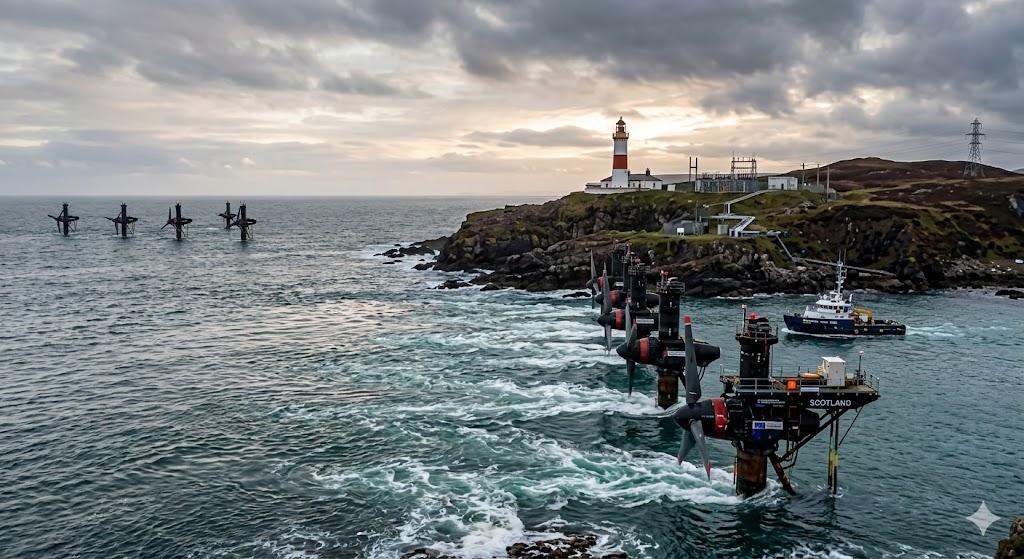
Tidal Energy’s Role in Europe’s Long-Term Energy Transition
Europe's energy transition is creating demand for a broader portfolio of renewable technologies. Wind and solar are expanding rapidly, while batteries, interconnectors, demand response, and flexible generation are becoming increasingly important. Within this evolving system, tidal energy could offer a specialized contribution based on predictable marine resources and strong engineering potential.
Tidal generation has an unusual operating characteristic. The timing of tides can be calculated far ahead, giving grid planners visibility that is difficult to achieve with weather dependent resources. Output still varies during each tidal cycle, but its timing is predictable. This distinction could become valuable as electricity systems manage larger shares of variable renewable generation.
The Europe Tidal Energy Market Share can help frame the technology's position within the wider renewable landscape. However, market position should not be judged only by installed capacity. Tidal energy's strategic value may also come from predictability, industrial innovation, regional employment, energy diversification, and the development of exportable marine technologies.
Long term deployment will depend on economics. Turbines must achieve reliable performance while installation, operations, maintenance, and financing costs decline. Developers can accelerate this process by standardizing components, improving access systems, increasing automation, and using data to optimize maintenance. Larger project arrays may also create efficiencies that are difficult to achieve with isolated demonstration units.
Hybrid projects could become especially attractive. Tidal resources can be paired with offshore wind, batteries, hydropower, or local demand to create more balanced energy systems. Shared cables and grid infrastructure may improve asset utilization, while storage can help shift electricity toward periods of higher system value.
Island and remote coastal communities may represent important early applications. These locations can face high electricity costs, limited grid capacity, and dependence on imported fuels. A predictable local renewable resource could complement existing generation and reduce exposure to fuel price volatility. However, project economics must still account for marine logistics and infrastructure constraints.
Energy security is another potential benefit. Expanding domestic renewable resources can reduce reliance on imported fossil fuels. Tidal energy will not provide the scale of wind or solar, but diversification can strengthen resilience by adding another source to the generation portfolio. A combination of technologies is often more robust than dependence on a single resource.
Industrial development could create value beyond electricity. Europe has established capabilities in offshore engineering, subsea systems, shipbuilding, electrical equipment, and digital technologies. Tidal projects can draw on these capabilities while creating specialized expertise. Companies that develop successful turbines, control systems, installation techniques, or maintenance services may find opportunities in other marine energy markets.
Environmental responsibility will remain essential. Marine ecosystems are complex, and project developers must evaluate interactions with wildlife, fisheries, sediment, navigation, and underwater conditions. Continuous monitoring and adaptive operating practices can help ensure that commercial development progresses with appropriate safeguards.
Public acceptance also matters. Coastal communities are more likely to support projects when they understand local benefits and have meaningful opportunities to participate in planning. Employment, port investment, community revenues, and transparent environmental information can contribute to stronger relationships between developers and stakeholders.
The next phase of the sector will be defined by evidence. Demonstration projects need to show high availability, predictable maintenance, safe operation, and improving costs. Every successful deployment can reduce uncertainty for future investors and regulators.
Tidal energy is therefore best understood as a complementary technology rather than a competitor to wind or solar. Its predictable resource, industrial potential, and regional applications give it a distinctive role. If Europe continues improving technology, infrastructure, financing, and policy conditions, tidal power could become a valuable part of a diversified, resilient, and low carbon energy future for future energy security and resilience.

 English
 Arabic
 French
 Portuguese
 Deutsch
 Turkish
 Dutch
Dutch
 Italiano
 Russian
 Romaian
 Portuguese (Brazil)
 Greek
Greek
 Indonesia