


What Should Buyers Check Before Choosing spotwelder Machines?
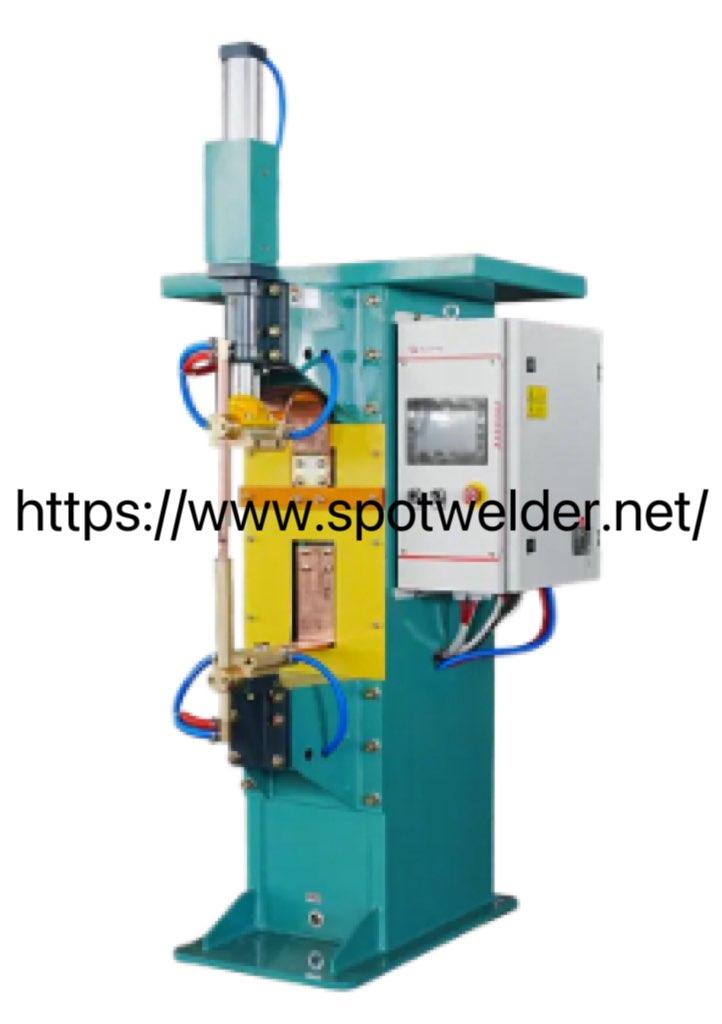
Spot Welder selection should begin with the actual workpiece rather than the machine name or rated capacity. Buyers need to understand the material, thickness, number of layers, joining locations, required joint condition, production rhythm, and available workshop resources. These details help determine the appropriate machine structure, electrical configuration, electrode arrangement, control method, and fixture design. For manufacturers and production teams, starting from the product can make the purchasing process more practical and reduce the risk of selecting a configuration that does not fit the intended application.
Start With the Actual Workpiece
The workpiece should be the starting point for machine selection.
Buyers can prepare drawings, photographs, samples, dimensions, material specifications, and joining locations before contacting a supplier. The shape of the component may affect electrode access, arm length, throat depth, fixture structure, and operator movement.
Two products made from similar materials may still require different machine structures because their dimensions and joining positions are different.
Providing complete product information gives engineers a clearer basis for discussing the suitable configuration.
Check Material Type and Thickness
Material type and thickness have a direct relationship with electrical and mechanical requirements.
Buyers should identify the exact material, grade, coating condition, number of layers, and thickness of each layer.
For example, a coated sheet can behave differently from an uncoated surface during the joining cycle. Different conductive materials can also require different current and pressure conditions.
Instead of selecting a model based only on thickness, buyers should provide the complete material stack for technical evaluation.
Count the Joining Locations
The number and position of joining points can affect the machine structure.
A product with a few accessible points may work with a manually operated configuration. A product requiring many repeated points may benefit from dedicated fixtures, multiple electrodes, or a more structured production arrangement.
Buyers should mark each required location on the product drawing.
The distance between points and the distance from the product edge can also affect electrode access and arm configuration.
Review Current, Pressure, and Timing
Electrical current, electrode pressure, and process timing work together.
Current determines the heat generated at the contact area, while pressure affects physical contact between the electrodes and workpiece. Timing controls how long the electrical input is applied.
Changing one parameter can affect the overall process.
For this reason, buyers should ask the supplier how the proposed current range, pressure system, and timing controls correspond with the material and thickness being processed.
Rated KVA alone should not be treated as the only basis for comparison.
Examine Electrode Requirements
Electrode design should match the workpiece.
The tip shape, diameter, material, length, and access direction can affect the contact area and operating process.
For products with narrow spaces or unusual geometries, standard electrodes may not provide sufficient access.
Buyers should therefore provide drawings showing the exact locations that need to be processed.
If special electrodes are required, the supplier can evaluate their dimensions together with the arm structure and transformer configuration.
Consider the Machine Structure
Machine structure should correspond with product size and production method.
A compact component may require a different frame from a large sheet assembly. Long or deep workpieces may need increased internal clearance or an extended arm arrangement.
Buyers should check:
Workpiece dimensions
Throat depth
Electrode movement
Working height
Operator access
Fixture space
Machine footprint
This information can help determine whether a standard structure is suitable or whether a customized frame should be considered.
Match the Control Method
Control requirements can vary according to the production application.
Some projects may use conventional power-frequency control, while others may require medium-frequency inverter technology or capacitor-discharge operation.
The choice should relate to the material, production cycle, required control range, and electrical conditions.
Buyers can ask about current adjustment, timing settings, pressure sequence, parameter storage, monitoring functions, and operator interface.
The goal is to select control functions that support the actual production process rather than simply choosing a system with a long feature list.
Review Transformer Capacity
The transformer should match the machine and intended process.
Buyers can check rated capacity, secondary voltage, current output, duty cycle, cooling method, dimensions, and connection structure.
It is also important to consider the production rhythm. A machine operating occasionally may have different requirements from one running continuously throughout a production shift.
When replacing an existing transformer, mechanical dimensions and terminal positions should also be checked because electrical compatibility alone may not guarantee a suitable installation.
Check Cooling Requirements
Cooling can become important during repeated production.
Depending on the configuration, the machine may require air cooling or water cooling for certain components.
Buyers should confirm water flow, inlet and outlet requirements, air pressure, ambient conditions, and available workshop utilities when applicable.
These requirements should be included in the technical proposal before the order is finalized.
Early confirmation allows the factory to prepare the required infrastructure before delivery.
Think About Production Volume
Production volume can influence the operating method.
For small batches, manual positioning may provide sufficient flexibility. For repeated high-volume production, dedicated fixtures, pneumatic movement, multi-point structures, or automated handling may be considered.
Buyers should provide an estimated daily output, cycle target, number of operators, loading method, and unloading method.
This information helps the supplier understand whether the project requires a basic machine or a more integrated production solution.
Evaluate Fixture Design
A suitable fixture can help maintain consistent component positioning.
The fixture should hold the product securely while allowing the electrodes to reach the intended locations.
For complicated components, buyers can provide product drawings and indicate the loading direction, reference points, and sequence of operations.
The supplier can then assess whether a standard fixture is sufficient or whether a customized fixture should be developed.
Fixture design should be discussed together with the machine rather than treated as an unrelated accessory.
Request Sample Testing
Sample testing can provide useful information before a larger order.
Buyers can send representative workpieces and ask for a trial using the proposed machine configuration.
The test can examine current, pressure, timing, electrode structure, surface marks, joint appearance, and fixture positioning.
If the result does not meet the required standard, the configuration can be adjusted before the final machine is completed.
This process can also help both sides establish a clear reference for future production.
Check Workshop Conditions
The installation environment should be considered before selecting a machine.
Buyers should confirm:
Factory voltage
Frequency
Available floor space
Compressed air
Cooling water
Ventilation
Operator access
Material loading space
International buyers should pay particular attention to electrical specifications because factory conditions can vary between countries and regions.
Confirming these details early can prevent installation difficulties after delivery.
Review Maintenance and Spare Parts
Long-term operation requires routine maintenance.
Buyers should ask about electrode replacement, component inspection, cooling maintenance, controller service, transformer maintenance, and commonly required spare parts.
It is also useful to request a parts list before delivery.
A clear parts reference can help maintenance personnel identify replacement components more efficiently when service is required.
Compare the Complete Proposal
The final purchasing decision should consider the complete application rather than one specification.
Buyers can compare material compatibility, thickness range, current capacity, pressure, timing, electrode structure, transformer configuration, controller type, machine dimensions, cooling method, fixture support, production rhythm, testing arrangements, and service support.For buyers evaluating industrial resistance joining solutions, spotwelder offers different machine configurations for applications involving sheet components, wire products, metal parts, and customized production requirements. Buyers can review the available product range at https://www.spotwelder.net/product/ and prepare drawings, samples, material specifications, production targets, and workshop information before requesting a detailed technical proposal.

 English
 Arabic
 French
 Spanish
 Portuguese
 Turkish
 Dutch
Dutch
 Italiano
 Russian
 Romaian
 Portuguese (Brazil)
 Greek
Greek
 Indonesia